Make the Impossible Possible
Inspiration from Wright Brothers for Today’s Founders
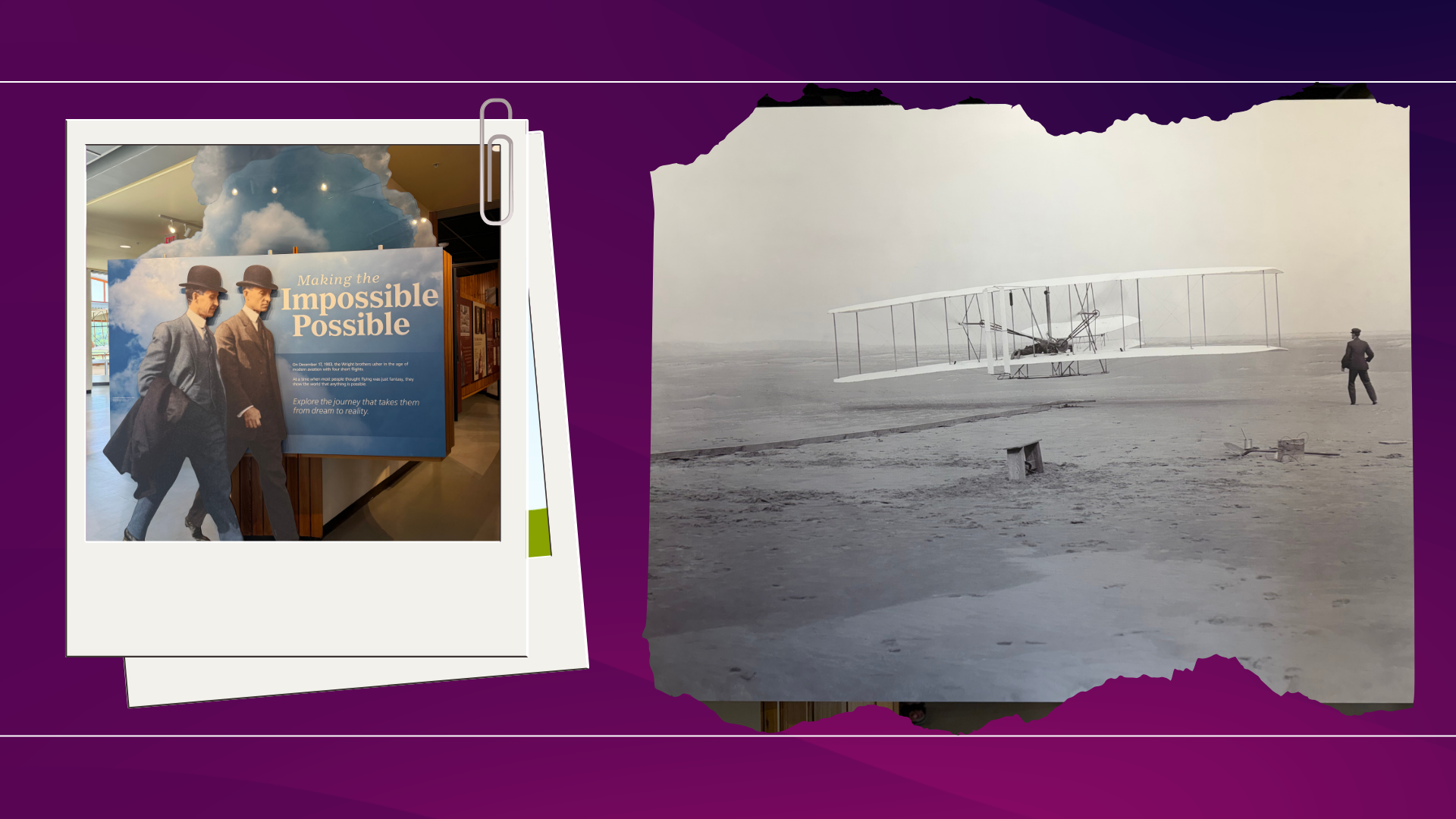
“Make Impossible Possible.” It sounds like standard corporate motivation, but stand on the dunes of Kitty Hawk, and the phrase takes on real weight.
Last week, I visited the Wright Brothers National Memorial in Kill Devil Hills, North Carolina. It was deeply inspiring, particularly because so many of the problems the Wright brothers encountered and so much of their approach resonated with what I see in my work with technology and medical device founders.
Before December 17, 1903, controlled powered flight remained an unsolved challenge. The Wright brothers did not crack the code overnight. They had an idea, built prototypes, tested them, learned from failures, improved their designs, and tried again. It took years of experimentation, rigorous record-keeping, and support from people around them before they achieved the first successful flight.
Here are some inspirations for today’s founders.
1. Meticulous Logging: Treat Documentation as Core Infrastructure
The brothers kept strict records of every attempt. They wrote down their explicit goals, the exact structural materials used, and the precise outcome of each test. When published lift tables turned out to be wrong, they built a wind tunnel and tested over 200 wing shapes to collect accurate measurements before building again.
The Application: In technology and medical innovation, undocumented information can lead to repeated mistakes and costly decisions. Clear logs, tracking variables, and post-mortems help teams learn faster, communicate better, and make decisions based on evidence.
2. Root Cause Analysis: Solve the Fundamental Problem
When early flight tests revealed serious control problems, the brothers did not simply patch the symptoms. They investigated what was causing the problems, questioned the data they had relied on, and developed new solutions.
The Application: Hard problems require more than quick fixes. Whether debugging complex technology or addressing clinical and product-safety challenges, progress comes from identifying the underlying cause and designing a solution around it.
3. Unconventional Thinking: Challenge Accepted Assumptions
The Wright brothers looked beyond established approaches to flight. Their study of bird dynamics contributed to their thinking about aircraft control, leading to wing-warping as a way to manage lateral balance.
The Application: Breakthroughs do not always come from improving an existing solution. Sometimes they require stepping back, questioning accepted assumptions, and looking at the problem from a different perspective.
4. Precision Execution: Details Matter
The Wright brothers understood that every component mattered. From the engine and propellers to the aircraft’s structure and control system, small details could affect the performance of the entire machine.
The Application: In medical devices, robotics, and advanced hardware, details determine whether an innovation works reliably in the real world. Manufacturing tolerances, component quality, testing, and quality control are not secondary considerations. They are core parts of the product.
5. Keep Learning: Navigate the Learning Curve
The Wright brothers did not start as experts in every aspect of aviation. Their journey from bicycles to gliders to controlled, powered flight required them to continually develop new knowledge across aerodynamics, propulsion, materials, and construction.
The Application: Building frontier technology requires continuous learning beyond your original area of expertise. Founders and physician-innovators may need to understand regulatory requirements, manufacturing, business models, customer needs, and commercialization alongside their technical or clinical expertise.
6. Build the Right Ecosystem: You Don't Have to Do It Alone
The Wright brothers did not work in isolation. Their family supported them, their bicycle business provided resources, and people in Kitty Hawk helped with the practical challenges of conducting experiments in the Outer Banks.
Their story is also a story of connections: the people who provided knowledge, resources, assistance, and encouragement along the way.
The Application: Turning innovation into real-world impact requires an ecosystem. Technical collaborators, manufacturing partners, clinical sites, advisors, customers, and local networks can all become critical to moving an idea forward.
7. Don't Give Up: Progress Takes Time
Through bad weather, crashed gliders, tight budgets, and public skepticism, they stayed focused on their goal and kept working through every setback.
The Application: Deep tech and medical innovation often involve long development cycles, regulatory hurdles, technical challenges, and uncertain market adoption. Persistence matters, but so does knowing what to learn from each setback and what to change next.
The Takeaway
The Wright brothers did not make the impossible possible through one brilliant idea or one moment of inspiration. They documented their work, identified problems, collected data, challenged assumptions, paid attention to details, kept learning, built relationships, and continued improving over years.
That is what stayed with me after visiting the Wright Brothers National Memorial.
For today’s high-tech and HealthTech founders, the path from breakthrough idea to real-world impact may look very different, but the principle remains: Make the impossible possible by turning ideas into evidence, evidence into better decisions, and better decisions into action.